
Dental Practice, Kennington
Dentures in Kennington
A well-made denture should let you eat what you want and forget you're wearing it. If yours moves, rubs or clicks, that isn't something you have to put up with. From £850 per arch, with repairs and relines from £95.
- From £850 per arch
- Repairs and relines from £95
- Can be stabilised with implants
What are dentures?
Dentures are removable replacements for missing teeth. A full denture replaces all the teeth in an upper or lower arch; a partial denture fills the gaps around the natural teeth you still have.
They do more than fill in a smile. Missing back teeth make chewing hard work and push all the load onto a few remaining teeth. Missing front teeth change how you speak. A denture restores both, and supports the lips and cheeks that lose their shape when teeth go.

A well-made denture should let you eat what you want and forget you're wearing it. If yours moves or rubs, that isn't something you have to put up with.
Which type of denture?
The material changes how thin, how strong and how comfortable the denture is. This is what we make and what each one costs.
| Type | What it's like | Price (per arch) |
|---|---|---|
| Acrylic | The traditional gum-coloured denture. Straightforward to adjust, add to and repair later. | from £850 |
| Cobalt chrome | A slim metal framework with teeth set on it. Much thinner and stronger than acrylic, so it feels less bulky and lets you taste food more normally. | from £950 |
| Sunflex flexible acrylic | A flexible denture with no metal clasps, so nothing metallic shows when you smile. Comfortable and hard to break. | from £1,100 |
| Sunflex cobalt chrome | Combines the flexible, clasp-free aesthetics with a chrome framework for strength. | from £1,350 |
Which suits you depends on how many teeth are missing, where they are, and whether any clasps would show. We'll go through the options at your assessment rather than defaulting you to the cheapest or the dearest.
If your denture is loose
A loose lower denture is the most common complaint in dentistry, and it is usually fixable — either by relining the existing denture or by stabilising it with implants.
Jawbone slowly shrinks after teeth are lost, so a denture that fitted perfectly five years ago may not fit now. That's not something you did wrong.
A reline
Adds new material to the fitting surface so the denture matches the shape of your gum again. A hard reline is £150 and a soft reline £200 — far cheaper than a new denture, and often all that's needed.
Implant-retained dentures
For a denture that has never sat properly, implants change the experience completely. The denture clips onto several implants instead of resting on the gum, so it doesn't lift or rock when you eat and talk, and you get considerably more bite force back.
Step by step
Getting a new denture
Assessment
We look at the teeth you still have, the health of your gums and the shape of the ridge the denture will sit on, and talk through which type suits you.
Impressions and measurements
Careful impressions, then records of how your jaws meet and where the teeth need to sit for speech and appearance. Most of the quality of a denture is decided at this stage.
A try-in
You see the teeth set in wax before the denture is finished, so the shape, shade and position can be changed while changing them is still easy. Bring someone whose opinion you trust.
Fitting
The finished denture is fitted and adjusted. Expect it to feel strange and bulky at first — that's normal, and it passes.
Adjustments
Almost every new denture needs a small adjustment or two in the first few weeks as your mouth settles. That's expected, not a sign something's wrong — come back and we'll ease it.
Ask about dentures

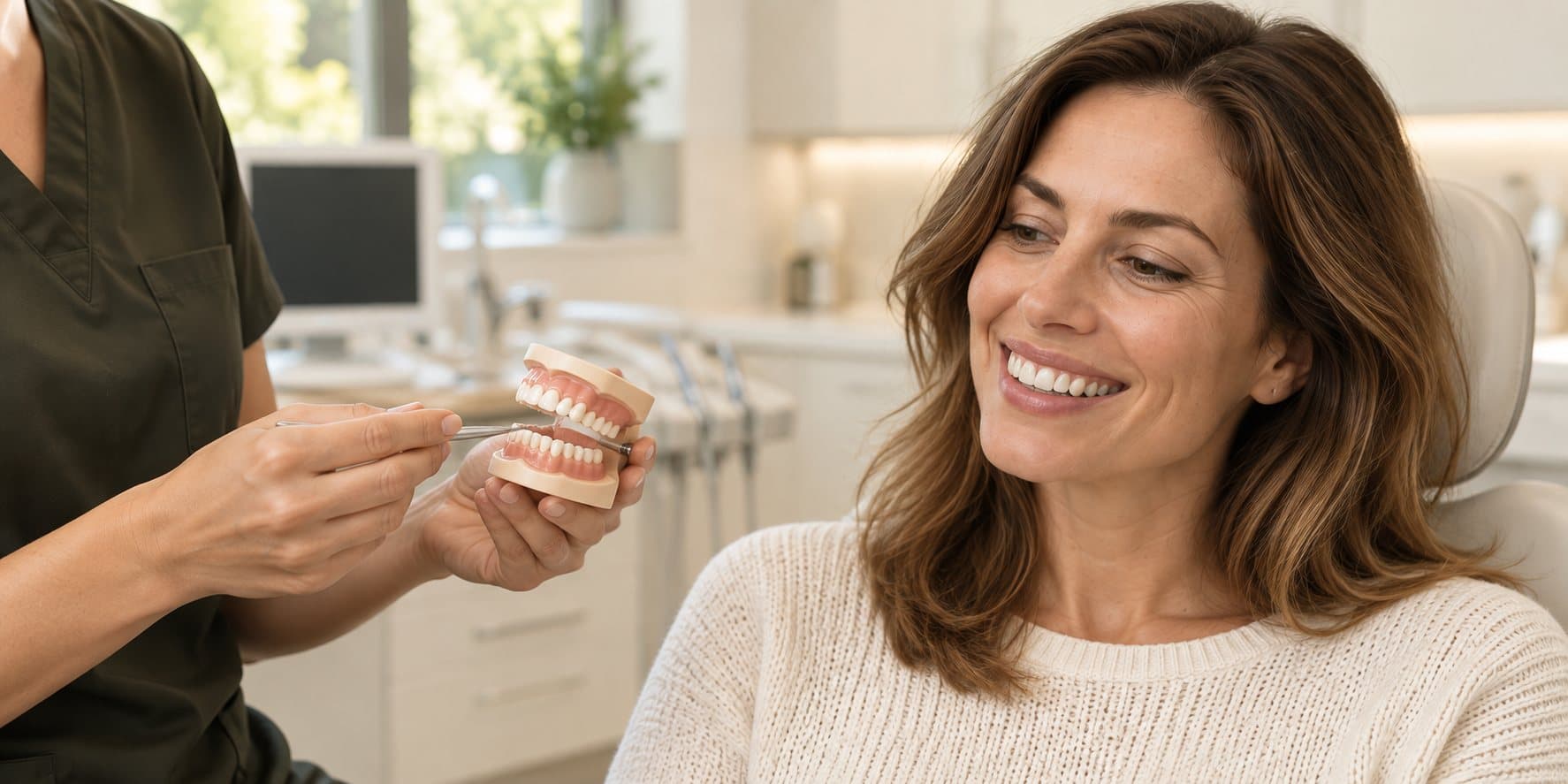
A denture does more than fill in a smile — it restores chewing and speech, and supports the lips and cheeks that lose their shape when teeth go.
Fees
How much do dentures cost in Kennington?
| Treatment | Price |
|---|---|
| Acrylic denture (per arch) | from £850 |
| Cobalt chrome denture (per arch) | from £950 |
| Sunflex flexible acrylic (per arch) | from £1,100 |
| Sunflex cobalt chrome (per arch) | from £1,350 |
| Sunflex tooth addition | £150 |
| Denture tooth addition | from £95 |
| Denture repair | from £95 |
| Hard reline | £150 |
| Soft reline | £200 |
| Dental implant (to stabilise a denture) | from £2,000 |
Questions
Frequently asked questions
How much do dentures cost in London?
At Pure Elegant Smile, an acrylic denture starts at £850 per arch, cobalt chrome at £950, flexible Sunflex acrylic at £1,100 and Sunflex cobalt chrome at £1,350. Repairs and tooth additions start at £95.
My denture is loose. Do I need a new one?
Not necessarily. Jawbone changes shape over time, and a reline — £150 hard or £200 soft — adds material to the fitting surface so it matches your gum again. That's often all that's needed. If it has never fitted well, implants to stabilise it are worth discussing.
Can you repair a broken denture?
Yes — denture repairs start from £95, and adding a tooth to an existing denture starts from £95 too. Ring 0203 950 6620 and bring the pieces in; don't try to glue it yourself, as household glue makes a proper repair much harder.
How long do dentures take to get used to?
A few weeks for most people. They feel bulky at first, speech takes a little practice, and eating starts with softer foods cut small. Small adjustments in the first weeks are normal and expected — come back rather than putting up with a sore spot.
Are flexible dentures better?
They're more comfortable for some people and they avoid visible metal clasps, which matters for a partial denture near the front. They're not automatically better — chrome dentures are thinner and stronger. We'll talk through which suits your mouth.
How do I clean my dentures?
Clean them over a folded towel or a basin of water so they don't break if dropped. Brush them daily with a denture brush and soap or denture cleaner — not ordinary toothpaste, which is abrasive. Take them out at night and keep them in water so they don't dry out, and clean your gums and any remaining teeth separately.
Can I have implants instead of dentures?
Often, yes — either implants replacing individual teeth or implants used to hold a denture securely in place. An implant-retained denture is usually the biggest single improvement available to someone struggling with a loose lower denture.
Book a denture assessment
Whether you need a new denture, a reline, a repair or a conversation about implants, start with an assessment and an honest answer about what would actually help.
Or call us on 0203 950 6620
Mon, Tue, Thu, Fri 10am–7pm · Closed Wed, Sat, Sun97 Kennington Lane, London, SE11 4HQ
Reviewed by Dr Nader Gavgani, GDC 75484